HEALTH. SAFETY. welfare
S.Artemenko, O.Horhota, L.Hrydkоvets, M.Yershova, B.Kushnir, Oskar Pena
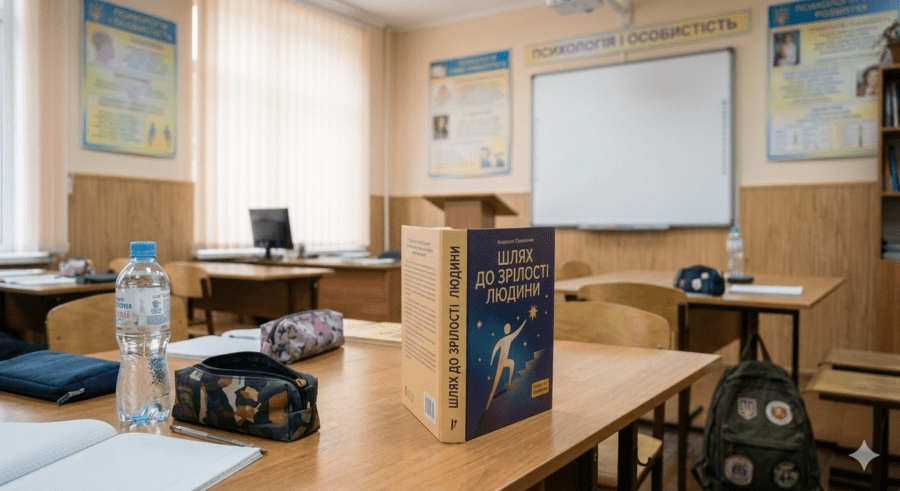
The Path to Human Maturity
Schoolbook for 5th grade students of general secondary education institutions
Schoolbook “The Path to Human Maturity” for 5th grade students of general secondary education institutions according to the elective course curriculum “The Path to Human Maturity” for grades 5-9 of general secondary education institutions (authors: O.Horgota, L.Hrydkovets, M.Yershova, H.Samoliuk; approved for use in the educational process by decision of the expert commission on psychology and pedagogy of the IMZO on March 20, 2024, protocol No. 1, registered in the Catalog of Approvals for Educational Literature and Curricula under No. 7.0003-2024).
AUTHORS OF THE schoolbook.
Svitlana Stanislavivna Artemenko – Master of Philology, specializing in the Ukrainian Language and Literature, ethnographer.
Olesia Bohdanivna Horhota – Candidate of Philosophical Sciences, PhD, lawyer, educational institution administrator.
Lyudmila Mykhailivna Hrydkovets – Candidate of Psychological Sciences, Associate Professor of the Department of Psychology at the Kyiv Institute of Business and Technology, Associate Professor at the Institute of Ecology, Economics and Law, lecturer at the Kyiv Three Saints Seminary of the Ukrainian Greek Catholic Church, Chair of the Ukrainian Association of Christian Psychology, Chair of the Scientific Council of the NGO “For Life and Human Dignity” , member of the National Association of Sexology and Sexual Medicine, member of the Association of Psychological Counseling and Trauma Therapy, member of the NGO “Association of EMDR in Ukraine – Professional Association for Special Trauma Therapy,” trauma therapist, fairy tale therapist. Author of over 130 scientific works and 15 manuals.
Yershova Maria Oleksiivna – educator, practical psychologist, sex education trainer, sexologist, member of the Ukrainian Association of Christian Psychology.
Bohdan Stanislavovych Kushnir – Master of Religious Sciences, specialization: catechetics and youth ministry, teacher of Christian ethics. Catechetical and Pedagogical Institute of the Ukrainian Catholic University.
Oskar Alberto Ramon Pena (Argentina) – Licentiate in Theology (Angelicum University, Rome), practical psychologist (Stefanyk Precarpathian University), psychologist at the Vladyka Sofron Dmytro Cultural and Educational Center.
The schoolbook “The Path to Human Maturity” (Schoolbook) is based on the achievements of philosophy, pedagogy, psychology, and cultural studies, and affirms respect for human dignity from conception to natural death, the opposite sex, human rights and freedoms, fosters sexual maturity, a sense of mutual respect and mutual assistance, and the ability of students to interact constructively with each other and with adults. It shapes students’ active civic stance, patriotism, respect for the cultural values of the Ukrainian people, their historical and cultural heritage and traditions, taking into account the age characteristics of the fifth graders.
Relevance. The phenomenon of acceleration, i.e., the rapid maturation of the younger generation, requires the adaptation of general secondary education subjects to the real needs and expectations of adolescents. Puberty is a process during which there is increased anxiety about physical changes, as well as changes related to emotions, feelings, and desires. Therefore, in order to effectively and timely help adolescents understand the changes that occur between childhood and adulthood, it is necessary to accompany them on their path to maturity.
The spread of loneliness among adolescents, the difficulties of starting a family, and overcoming post-traumatic stress disorder require that education focus on helping to build conscious and responsible relationships with people of different sex. The declining role of the family in society, the demographic crisis, and the decline in parental authority pose new challenges for society. Therefore, the task of modern education should be to instill family values in students; to foster responsible parenthood; helping adolescents to develop harmoniously in their current families and in those they will create in the future.
The threats facing adolescents today — cyberbullying, sexting, child abuse — require educators to provide protection mechanisms, teach students the ability to say “no” forming in students a firm belief in the value of life, health, and safety for themselves and those around them, and developing the necessary life skills that will give children security and psycho-emotional well-being in adult life.
The Schoolbook should become the basis for socio-psychological knowledge, the development of students’ skills and abilities, and also provides for the formation of a worldview and readiness to apply the appropriate set of knowledge and methods to explain the world of a man, nature, and society; understanding of physiological and psychological changes; responsibility for behavior in interpersonal relationships; the development of the ability to identify and assess one’s own needs and resources for the development of competencies, apply various methods of their development, find opportunities for learning and self-development, the ability to learn and work independently and in a team, organize one’s learning, evaluate it, share its results with others, and seek support when needed.
The Schoolbook is based on Christian values as set out in the State Standard for Basic Secondary Education: respect for the student’s personality and recognition of the priority of their interests, experience, personal choices, aspirations, and attitudes in setting goals and organizing the educational process, support for cognitive interest and perseverance; ensuring equal access to education for students without any form of discrimination against participants in the educational process; adherence to the principles of academic integrity in the interaction of participants in the educational process and the organization of all types of educational activities; the formation of a free personality of the student, support for his/her independence, enterprise, and initiative, the development of critical thinking and self-confidence; the formation of a culture of healthy lifestyles among adolescents, the creation of conditions for their harmonious physical and mental development and well-being; creating an educational environment that fosters an atmosphere of trust between participants in the educational process; affirming human dignity, honesty, compassion, kindness, justice, empathy, mutual respect and mutual assistance, respect for human rights and freedoms, and the ability of students to interact constructively with each other and with adults; the formation of an active civic position, patriotism, respect for the cultural values of the Ukrainian people, its historical and cultural heritage and traditions, and the state language in students; fostering in adolescents a love for their native land and a responsible attitude towards the environment.
The Schoolbook is aimed at developing students who are capable of self-awareness, harmonious social and interpersonal interaction aimed at preserving their own health and the health of others, who care about safety, and who demonstrate entrepreneurship and professional orientation to ensure their own and society’s well-being.
Purpose and objectives of the Schoolbook.
The purpose of the Schoolbook is to promote the harmonious psycho-emotional and spiritual development of adolescents who are capable of assertive behavior and building responsible relationships in society; to educate students to take a responsible attitude towards the life of every person, towards physical (including sexual), mental, social, and spiritual health; to master the basics of a healthy lifestyle and skills for safe sexual behavior; to lay the foundations for future married life; to nurture family values; to develop a responsible attitude towards parenthood.
To achieve this goal, the Schoolbook has the following objectives:
- laying the foundations for self-identification in students;
- fostering a conscious and active civic position;
- fostering responsibility for the environment, well-being, and stability in the future;
- teaching life criteria through the prism of physical, mental, spiritual, and social development;
- developing students’ awareness of the value of life and health of every person, responsibility for their own existence;
- developing in students a congruent perception of psychophysiological changes, positive self-esteem based on knowledge of the peculiarities of psychophysiological development;
- raising awareness among adolescents of the uniqueness of emotions and feelings and their importance in psychophysiological development;
- fostering a responsible attitude toward interpersonal relationships in students;
- forming in adolescents a stable motivational attitude towards a healthy lifestyle as a leading condition for maintaining and strengthening health;
- familiarizing students with the reproductive component of health and the factors that influence it;
- developing in students a responsible attitude towards future parenthood and the importance of family values;
- teaching adolescents methods of self-assessment and monitoring of their health status and level throughout their years of study;
- developing in students a sense of responsibility for their future, the ability to set their own goals, and skills for forecasting and planning for the future;
- helping children understand the processes that occur as they grow up (physiological changes, the nature of emotions, etc.), which will help reduce anxiety and worries in the context of “I’m not like that”/ “I’m not like that.”
The Schoolbook is based on scientific principles and spiritual and moral values that provide for the creation of a safe educational environment with an atmosphere of trust, without any form of discrimination against participants in the educational process; conditions have been created for cooperation, creativity, and adherence to the principles of academic integrity in the interaction of participants in the educational process and the organization of all types of educational activities. The result is the formation of a mature personality of the student, free in decision-making, independent, proactive, critically thinking, and self-confident.
The Schoolbook provides for:
- the development of students’ natural abilities, interests, and talents;
- the formation of competencies necessary for socialization and civic engagement, conscious choice of a future life path, and self-realization;
- continuing education at the level of specialized education or obtaining a profession;
- fostering a responsible, respectful attitude towards family, society, the natural environment, and the national and cultural values of the Ukrainian people;
- acceptance of different scientific, philosophical, and religious views of students;
- fostering respect for parents and the environment in which students are raised;
- supporting the physiological and socio-psychological development of schoolchildren;
- forming family values;
- developing awareness of assertive (mature, responsible) behavior;
- acquiring positive experience of personal development in one’s own formation.
The Schoolbook is based on approaches, principles, goals, content, forms, methods, and means that are adequate to the requirements of the time and the task of forming a healthy, mature, highly moral personality. It takes into account students’ mastery and use of information technologies, age and individual psychological characteristics, and their experience of moral behavior.
The Schoolbook sets special requirements for teachers, who must be aware of the importance of their personal and socio-psychological mission and possess the necessary competencies. The relationship between teacher and student during the educational process is rethought: from the transmission of ready-made scientific, psychological, and social knowledge to the consciousness of students to partnership interaction, subject-subject relationships, dialogue, the development of critical thinking in students, and the joint search for answers to socio-psychological problems.
The Schoolbook aims to overcome the formal aspects of the educational process and its excessive verbalization, to promote synergy and activate the psychological and physical strengths of teachers, students, parents, and the community.
Among the forms and methods of educational activity, the main emphasis is on innovative, interactive, and information and communication educational technologies. Along with verbal methods and forms of work, practical and activity-based forms and methods are used to help students become more active: situational cases, role-playing games, dramatization, project activities, assignments, presentations, portfolios, real and imaginary journeys, real and imaginary excursions, and meetings.
The Schoolbook presents an activity-based competency model of learning: it not only provides information, but also guides action; it presents material through problem questions, research tasks, case studies, and choice situations; offers various ways of developing competencies – from processing information to summarizing and applying the acquired knowledge in practice, through practical research to explaining the material learned.
At the intersection of theory and practice, the textbook develops in students: knowledge that makes sense in life experience; abilities, skills, and ways of thinking that help in personal development; views, values, and other personal qualities that find their place in society. The balance of knowledge, skills, and values becomes a coordinated interaction of those important components of modern education that ensures the holistic formation of competencies.
The Schoolbook maintains a dynamic balance: knowledge as a cognitive basis, skills as the ability to act, values that shape a person’s worldview and their attitude towards themselves, the world, and others. “Balance is achieved when knowledge is transformed into skills, and skills are reinforced by value content” (T. Zaseikina).
The content of the Schoolbook consists of two parts: conceptual and practical, which consists of exercises for practising key skills and abilities related to preserving life and strengthening health. Completing these exercises is a mandatory part of the lessons on the relevant topics.
The content of the Schoolbook is revealed through the following components: the text, which includes the main and additional texts, concepts and their definitions; visual (illustrations, photos, presentations, collages); activity-based (situational tasks, games, exercises, experiments, creative projects); value-contextual (examples from life, history, ethical situations); digital/multimedia (videos, interactive activities, QR codes).
The Schoolbook presents two main approaches to learning: 1) explanatory-problem-based (the lesson text contains problem questions, encourages the search for answers, and provides ready-made answers; at the end of the lesson, there is a discussion of the questions studied); 2) activity-based (the lesson contains tasks that encourage independent search for answers to problem questions and research).
The Schoolbook reveals the competence-based activity paradigm of learning—the development of the student’s personality through: activity, active research, knowledge construction, process moderation, analysis, comparison, reflection, creation of new ideas, expression of opinions, decision-making, and formulation of ideas.
The Schoolbook consists of four sections: “Human life as a priceless gift and fundamental value,” “Self-identification of the individual and their attitudes,” “Family and family values,” and “Mutual respect. Psychology of interpersonal relationships.”
It has the following content: acceptance by students of the beauty of their own and the opposite sex; revealing the value of human life; forming a positive and responsible attitude towards family and family values in students; students’ awareness of the importance of subject-subject interaction in general, and sex-oriented interaction in particular, based on the principles of mutual subject-subject giving.
When using a spiral-linear scheme, the following conditions of the formative process are ensured: informative dosing; activation of the child’s attention and interest through previously acquired knowledge; deepening the study of the topic, taking into account the natural age development of the student.
Section 1. “Human life as a priceless gift and fundamental value” provides for the formation of a holistic view of students about the phenomenon of life, about themselves, their bodies, understanding their physical, mental, and spiritual health, human safety and development, their interconnection with lifestyle and the environment, understanding life as a fundamental human value.
Section 2. “Self-identification of the individual and their attitudes” is devoted to the study of one’s own identity, sex self-identification, and factors that influence the formation of sexual identity in modern society. It examines the rules of safe behavior in the environment and safe sex-role behavior. Students develop skills to counteract negative social influences and destructive behavior.
Section 3. “Family and Family Values” focuses on the study of family factors that influence mental and reproductive health, drawing parallels between overall health and future childbearing. Prevention of harmful habits is considered in the context of developing positive self-esteem, critical thinking skills, and the ability to make informed decisions.
Section 4. “Mutual Respect. Psychology of Interpersonal Relationships” contains information on factors that influence the emotional, intellectual, and spiritual development of students and promotes the formation of effective intersex communication.
We need help publishing a textbook.
We estimate that 250,000 UAH is needed:
25,000 UAH for layout
25,000 UAH for review by the Ministry of Education and Science commission
200,000 UAH for printing
We would be grateful for your support. Your contribution is an investment in your children’s future.
Bank details for the NGO “GUARD OF LIFE (GUARD OF LIFE)”:
EDRPOU 43012234
IBAN: UA933052990000026007025008384
PrivatBank Card 5169 3305 2390 0915
Be sure to specify the payment purpose: “Voluntary donations for statutory activities.”
Proposals for cooperation can be sent to the email address:
yershovamariia19@gmail.com